
By: Peter Farago – Managing Editor
In the ever-turning cycles of history, there are few voices whose resonance transcends time, space, and cultural shifts with the unwavering elegance of Oscar Wilde. October 16th, 2024 marks the 170th anniversary of Wilde’s birth, and it feels fitting to pause and reflect not only on his life but on his unparalleled legacy, one that feels more urgent and necessary today than perhaps at any time in recent memory.
Born into a world of Victorian ideals, Wilde shattered the conventions of his time, leaving behind not only his remarkable literary contributions but a life lived with unapologetic boldness. His works, while often lauded for their wit and flamboyance, carried deep emotional truths—none more so than his fairy tales. Wilde’s story “The Fisherman and His Soul” and “The Happy Prince” stand out today as especially poignant reminders of the enduring power of love and friendship in a world increasingly detached from both.
In these stories, Wilde probes at the fabric of human relationships, love, and sacrifice, presenting an ethereal vision of connection that is all the more touching for the bittersweet inevitability of loss. As we celebrate Wilde’s 170th birthday, these two stories are more than just pieces of a literary canon—they are calls to action, asking us to examine what we have forgotten, neglected, or discarded in our modern lives.
The Fisherman and His Soul: A Parable of Love’s Defiance
“The Fisherman and His Soul,” first published in Wilde’s collection A House of Pomegranates in 1891, tells the story of a young fisherman who falls deeply in love with a mermaid. Their love is pure and simple, but there is a price for their union: the fisherman must forsake his soul. In a harrowing scene, the fisherman succeeds in separating his soul from his body, but it is a decision that sets off a tragic chain of events.
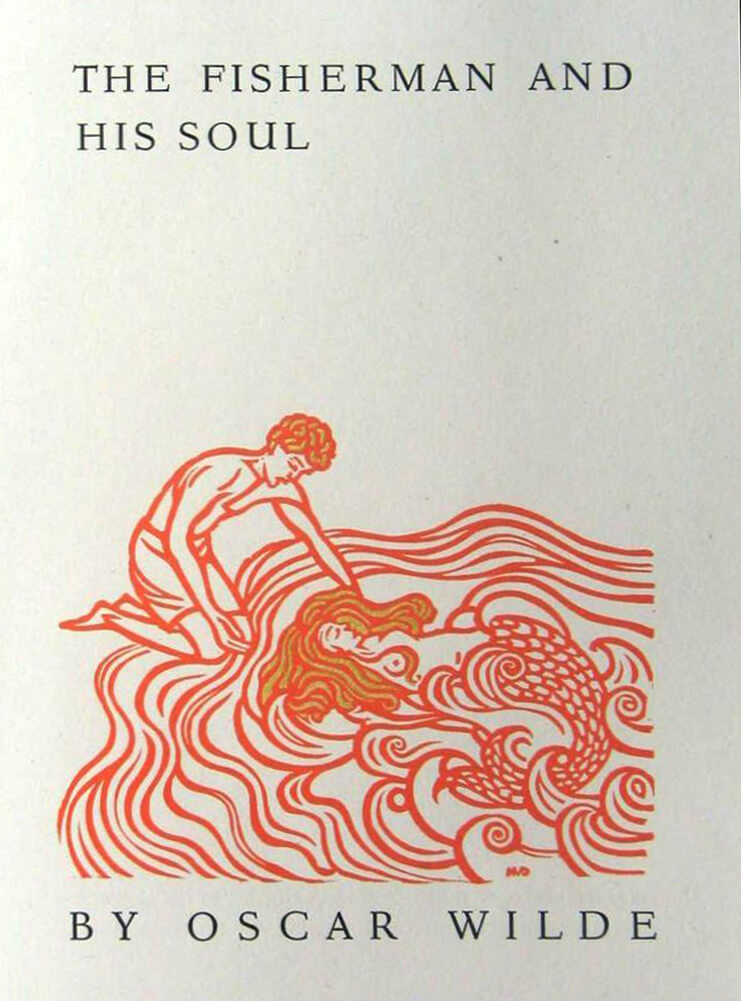
At its core, this story is about the power of love to transcend earthly, moral, and even spiritual constraints. The fisherman’s willingness to give up his soul, something traditionally seen as sacred and indispensable, speaks to the magnitude of his love for the mermaid. In contrast, the soul itself embarks on a journey that highlights the pitfalls of ambition, greed, and detachment from love. It is a parable about choosing between the heart’s desires and the constraints of societal norms—a recurring theme in Wilde’s own life.
In today’s world, where relationships often feel transactional or commodified, “The Fisherman and His Soul” reminds us that love, in its truest form, demands vulnerability and sacrifice. Wilde’s fisherman is prepared to surrender his essence, his soul, for the sake of love. His journey is a stark contrast to the disconnection prevalent in contemporary culture, where technology often mediates our interactions and distances us from the very emotions that define our humanity.
This tale invites us to reconsider our priorities. What are we willing to give up for love in a time when convenience often overshadows commitment? In our era of swiping left or right, of ephemeral romances and short-lived friendships, Wilde’s story stands as a challenge: can we still love in a way that feels all-consuming and transformative? Or have we allowed the currents of modernity to dilute the power of genuine affection?
The Happy Prince: A Meditation on Friendship and Sacrifice
If “The Fisherman and His Soul” is a meditation on love, then “The Happy Prince,” first published in The Happy Prince and Other Tales in 1888, serves as Wilde’s love letter to friendship and compassion. The story revolves around a golden statue of a prince who once lived in luxury but, after his death, becomes a symbol of selfless giving. Stationed high above the city, the prince sees the suffering of the poor and helpless, and with the help of a little swallow, he gives away his wealth—his gold leaf and precious jewels—to alleviate their suffering.
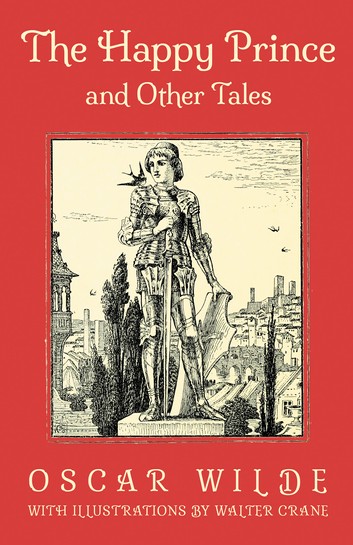
The relationship between the statue and the swallow is one of the most moving portrayals of friendship in literature. The swallow initially intends to leave the cold city and fly to Egypt, but the prince’s kindness compels him to stay. As the prince asks the bird to strip away pieces of his body to give to the needy, the swallow—at first hesitant—becomes his devoted companion, ultimately sacrificing his own life to be with the prince until the end.
This story, like “The Fisherman and His Soul,” is a meditation on the nature of sacrifice. But in “The Happy Prince,” Wilde focuses on friendship and the moral obligation we have to help one another, even when it comes at great personal cost. The prince’s transformation from a self-absorbed ruler to a benevolent protector echoes Wilde’s belief that true happiness is found not in riches but in the bonds we form with others.
In today’s world, where the notion of community often feels fragmented and where we are constantly bombarded by messages that prioritize self-interest over collective well-being, “The Happy Prince” serves as a reminder of the importance of empathy. Wilde’s prince is an embodiment of compassion, a figure who literally gives his all for the sake of those who have nothing.
The story’s depiction of the bond between the prince and the swallow also resonates deeply in an age where friendships can be fleeting, often maintained more by the superficial connections of social media than by genuine emotional investment. Wilde’s message is simple but profound: friendship is about more than shared interests or moments of convenience—it is about standing by someone when they are at their most vulnerable, even when it means risking something of ourselves.
Wilde’s Vision in the Modern World: A Call to Reconnect
As we celebrate Wilde’s 170th birthday, it is worth asking ourselves what he might think of the state of love and friendship in 2024. Wilde was, after all, a man who lived defiantly, often rejecting societal expectations in pursuit of truth and beauty. His fairy tales, though whimsical and fantastical on the surface, were deeply reflective of his own struggles with societal norms and the pain of isolation.
Both “The Fisherman and His Soul” and “The Happy Prince” offer us a vision of a world where love and friendship transcend the limitations imposed by society—whether they be moral, economic, or physical. In Wilde’s universe, the greatest triumphs are found in the connections we forge with others, even when those connections demand immense personal sacrifice.
Today, we live in a world that often feels disconnected from such values. The digital age, for all its advances, has created a landscape where communication is instant, but intimacy is rare. We are more “connected” than ever, yet loneliness remains a persistent issue. Love and friendship, the very cornerstones of Wilde’s fairy tales, are sometimes treated as commodities—something to be acquired, experienced briefly, and then discarded when no longer convenient.
And yet, Wilde’s stories refuse to let us give in to cynicism. In “The Fisherman and His Soul,” love is worth giving everything for, even when it defies the logic of the world around us. In “The Happy Prince,” friendship is a sacred bond that asks us to think beyond ourselves and act with kindness, even when there is nothing left to give.
These are lessons we need now more than ever. In an era of growing individualism and a retreat from community, Wilde’s tales remind us of the joy that comes from true connection. His stories ask us to reexamine the ways in which we interact with others and to consider whether we, like the fisherman or the prince, are willing to make sacrifices for the people we love and the friends we cherish.
A Legacy of Defiance and Beauty
Oscar Wilde’s life was marked by rebellion—against societal norms, against the moral hypocrisy of his time, and ultimately against the forces that sought to silence him. He endured public scandal, imprisonment, and personal heartbreak, yet through it all, he maintained an unwavering commitment to beauty, truth, and love. His fairy tales, often overshadowed by his more famous works like The Picture of Dorian Gray or The Importance of Being Earnest, offer a glimpse into Wilde’s deepest convictions.
At the heart of Wilde’s vision is the belief that beauty and love are inseparable from sacrifice. Whether it is the fisherman giving up his soul, the prince giving away his gold, or the swallow sacrificing his life, Wilde shows us that love and friendship are not passive emotions but active choices—choices that often come with great cost.
As we celebrate Oscar Wilde’s 170th birthday, let us not only honor his wit, his style, and his flamboyance but also the deeper truths he left behind in his writing. Wilde’s stories may be filled with fantasy, but their lessons are more real today than ever before. In a world where love and friendship are increasingly on the wane, Wilde’s tales stand as a testament to the power of human connection and the beauty of a life lived with passion, empathy, and, above all, love.
Happy 170th birthday, Oscar Wilde. Your words continue to inspire, challenge, and uplift us—today, tomorrow, and for generations to come.